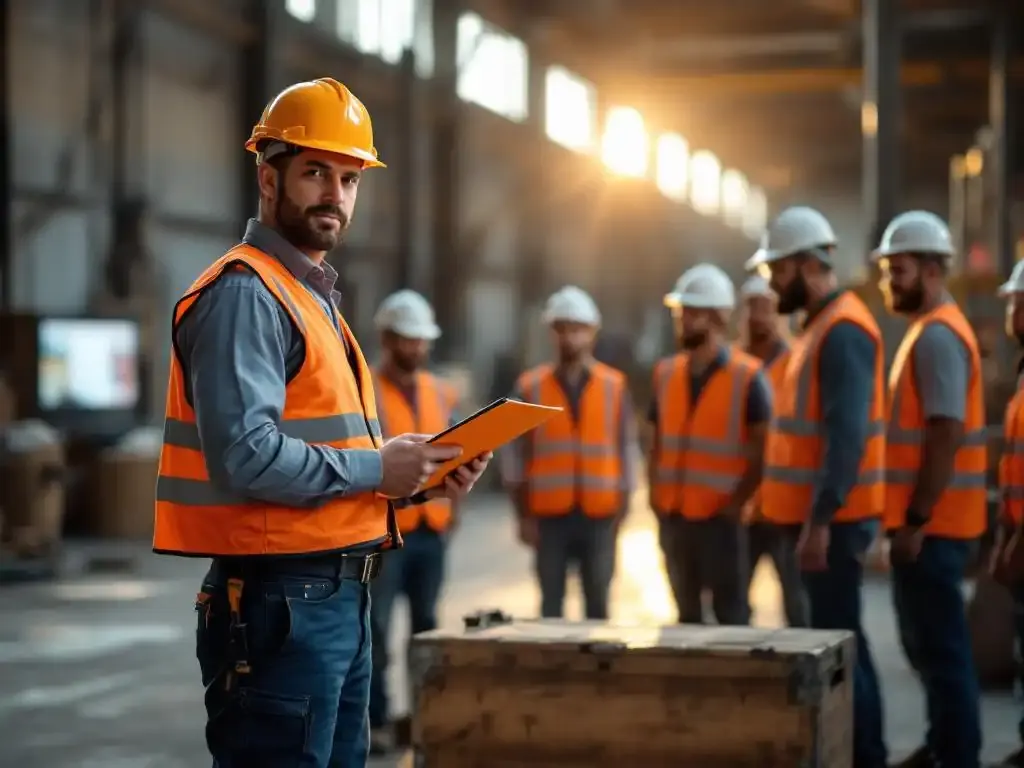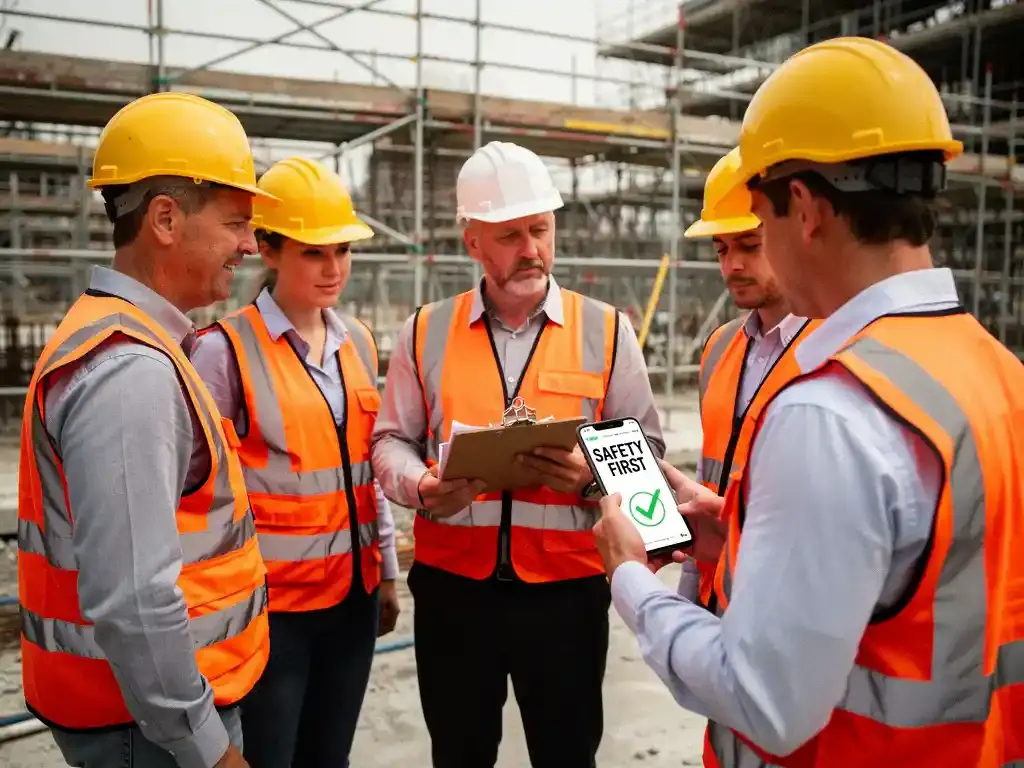

The three types of safety at work are physical safety, psychological safety and social safety. Physical safety protects people from injury and ill health. Psychological safety means people can speak up, ask questions and admit mistakes without fear. Social safety protects people from bullying, harassment, discrimination and violence.
Most organisations put almost all their effort into the first. But a worker who is afraid to report a hazard, or who is being bullied by a colleague, is not safe either. This guide explains each type with its UK legal framework, the difference between them, other common ways of dividing "types of safety", and practical steps supervisors can take for each.
The 3 types of safety at a glance
| Type | What it means | UK framework | Examples on site |
|---|---|---|---|
| Physical safety | Protection against injury and ill health from the work and the workplace | Health and Safety at Work etc. Act 1974; Management Regulations 1999; Work at Height, PPE, COSHH and other regulations | Edge protection, machine guarding, safe lifting, PPE, toolbox talks, inspections |
| Psychological safety | Feeling able to speak up, ask, challenge and admit mistakes without fear of punishment or embarrassment; protection against work-related stress | Duty to assess risks to mental health, including stress (Management Regulations 1999, reg. 3); HSE Management Standards | Workers stopping an unsafe job, reporting near misses, asking "stupid" questions |
| Social safety | Freedom from bullying, harassment, discrimination, intimidation and violence | Equality Act 2010; Worker Protection Act 2023; Protection from Harassment Act 1997; HSE guidance on work-related violence | Clear code of conduct, a safe way to raise complaints, action on abuse from colleagues or the public |
1. Physical safety
Physical safety is what most people think of first: protecting workers from accidents and from harm to their health. It covers everything from falls from height and moving vehicles to noise, dust, chemicals and manual handling.
In the UK, the foundation is section 2 of the Health and Safety at Work etc. Act 1974: employers must ensure, so far as is reasonably practicable, the health, safety and welfare at work of their employees. The Management of Health and Safety at Work Regulations 1999 require a suitable and sufficient risk assessment, and comprehensible information and adequate training for workers. Specific regulations cover particular hazards, such as the Work at Height Regulations 2005, COSHH 2002 and the PPE at Work Regulations 1992.
How you recognise good physical safety
- Risks are assessed and controlled, with collective measures before PPE.
- Equipment is maintained and inspected; defects are reported and fixed.
- Workers know the risks of their tasks and the safe method, in a language they understand.
- Regular workplace inspections check that what is on paper is what happens on site.
2. Psychological safety
The term was made popular by Harvard professor Amy Edmondson, who defined psychological safety as a shared belief within a team that it is safe to take interpersonal risks: to speak up, ask questions, raise concerns and admit mistakes without being humiliated or punished. Google's research into its own teams (Project Aristotle) found it was the most important factor in team effectiveness.
In health and safety, psychological safety is the difference between a worker who says "stop, this isn't right" and one who keeps quiet because the last person who spoke up was laughed at. Without it, near misses go unreported and problems surface only when someone is hurt.
Psychological safety and work-related stress
In the UK, the term is also used more broadly for mental wellbeing at work. Employers must assess the risk of work-related stress just like any other risk. HSE's Management Standards set out six areas to look at:
- Demands: workload, work patterns and the work environment
- Control: how much say people have in the way they do their work
- Support: encouragement and resources from managers and colleagues
- Relationships: promoting positive working and dealing with unacceptable behaviour
- Role: whether people understand their role and avoid conflicting roles
- Change: how organisational change is managed and communicated
Signs of a psychologically safe team
- People ask questions without embarrassment, including new starters.
- Mistakes and near misses are discussed as learning, not blame.
- Workers challenge each other, and their supervisor, on unsafe behaviour.
- Ideas for improvement come from the shop floor, not only from management.
3. Social safety
Social safety means people are free from unwanted behaviour by others at work: bullying, harassment, discrimination, intimidation, aggression and violence. That includes behaviour from colleagues and managers, but also from customers, patients, clients and the public.
The main UK framework:
- Equality Act 2010: protects against harassment and discrimination related to protected characteristics such as sex, race, disability, religion, age and sexual orientation.
- Worker Protection (Amendment of Equality Act 2010) Act 2023: since 26 October 2024, employers have a positive duty to take reasonable steps to prevent sexual harassment of their employees.
- Protection from Harassment Act 1997: covers courses of conduct amounting to harassment.
- Health and safety law: HSE defines work-related violence as any incident in which a person is abused, threatened or assaulted in circumstances relating to their work, and expects employers to assess and control that risk.
Warning signs of poor social safety
- "Banter" about someone's nationality, gender or religion that nobody challenges.
- Workers avoiding certain colleagues, shifts or areas.
- Abuse from customers or the public seen as "part of the job".
- No clear way to raise a complaint confidentially, or complaints that lead nowhere.
What is the difference between social and psychological safety?
Social safety is about protection from harmful behaviour by others. Psychological safety is about whether you feel free to speak and act without fear of a negative reaction.
An example: a worker who is bullied by a colleague has a social safety problem. A worker who sees a damaged harness but does not mention it because the supervisor always reacts angrily has a psychological safety problem. The two reinforce each other: you cannot have psychological safety in a team where bullying is tolerated, but the absence of bullying does not automatically mean people feel free to speak up.
Other ways to divide "types of safety"
If you searched for types of safety, you may have come across other classifications. They are not wrong, they simply answer a different question.
| Classification | Types | Used for |
|---|---|---|
| Physical, psychological, social | The 3 types of safety in this article | How safe people are, and feel, at work |
| Personal, occupational and process safety | Individual behaviour; protection of workers from workplace hazards; preventing major incidents such as fires, explosions and releases in high-hazard industries | Industry, chemicals, energy |
| Five types of hazards | Physical, chemical, biological, ergonomic and psychosocial hazards | Risk assessment: making sure no category is overlooked |
| Safety by subject | Fire safety, electrical safety, food safety, road safety, construction safety and so on | Specific rules and training per topic |
Another popular framework is the 5 Cs of health and safety: compliance, competence, communication, cooperation and culture. It describes how to manage safety rather than which types exist.
How the three types of safety work together
The three types are connected. Poor social or psychological safety directly damages physical safety: people who are afraid, stressed or excluded report fewer hazards, make more mistakes, are absent more often and leave sooner. Strong psychological safety is what makes near miss reporting, stop-work authority and honest toolbox talks work. That is the heart of a good safety culture; see how to build a safety culture.
Practical steps for supervisors, per type of safety
Physical safety
- Start the day with a short briefing on today's risks.
- Use clear, visual work instructions in workers' own language.
- Hold regular toolbox talks and check understanding.
- Walk the site and act on what you see, the same day.
Psychological safety
- Thank people who raise concerns or stop a job, every time.
- Admit your own mistakes; it gives others permission to do the same.
- Ask open questions in toolbox talks: "What could go wrong here?"
- Watch workload and pressure, and talk to people who seem stressed.
Social safety
- Make the code of conduct clear and challenge unacceptable "banter" straight away.
- Make sure everyone knows how to raise a complaint, including confidentially.
- Take reports seriously and follow up visibly.
- Assess and control the risk of abuse or violence from the public.
Toolbox talk topics for all three types of safety
- Physical: working at height, manual handling, PPE, vehicles and pedestrians, hazardous substances, heat and cold.
- Psychological: speaking up and stop-work authority, reporting near misses, fatigue, stress and mental health, asking for help.
- Social: respect on site, banter vs bullying, sexual harassment, dealing with aggressive customers, working with colleagues who speak another language.
Frequently asked questions
What are the 3 types of safety?
Physical safety (protection from injury and ill health), psychological safety (feeling able to speak up and make mistakes without fear) and social safety (freedom from bullying, harassment, discrimination and violence).
How many types of safety are there?
It depends on the classification. The three-way split into physical, psychological and social safety is common for workplaces. Others divide safety into personal, occupational and process safety, or into five types of hazards: physical, chemical, biological, ergonomic and psychosocial.
What are the five types of safety hazards?
Physical (noise, falls, machinery), chemical (substances, dust, fumes), biological (bacteria, viruses), ergonomic (lifting, posture, repetitive work) and psychosocial (stress, violence, harassment).
Is psychological safety a legal requirement in the UK?
The term itself is not in law. But employers must assess and manage the risk of work-related stress like any other health risk, and must prevent harassment and discrimination. Creating a team where people feel safe to raise concerns is one of the best ways to meet those duties.
How do you measure psychological safety?
Use a short anonymous survey (for example based on Edmondson's statements) and watch behaviour: who speaks in toolbox talks, how many near misses are reported and how people react to mistakes.
Which type of safety should I start with?
Physical safety is the legal baseline, but do not treat the others as extras. Small steps on psychological safety, such as thanking people for reporting, often improve physical safety too.
Support all three types of safety with E-lia
E-lia delivers short toolbox talks via WhatsApp on physical topics like working at height and PPE, but also on speaking up, respect on site and stress. No app, no login, in each worker's own language, with a short knowledge check, done in 5 to 8 minutes. Workers can report unsafe situations from their phone, and your dashboard shows who has completed which talk.
Make safety a conversation, not a folder
Receive a real toolbox talk on your own phone and see how it works for your team.