

A site induction is the short safety briefing everyone receives before they are allowed onto a site. It sets out the rules that apply, the hazards they will meet and what to do if something goes wrong. On construction projects the principal contractor must make sure a suitable site induction is provided under CDM 2015; elsewhere the duty sits in the Management of Health and Safety at Work Regulations 1999.
This guide explains what a site induction is, who needs one, what it must cover, what the law says, and how to run inductions on paper, by video, online or on the worker's own phone without creating a queue at the gate.
What is a site induction?
A site induction, sometimes called a contractor induction or an access briefing, is given to everyone entering the site. The point is simple: nobody walks onto a site without knowing what is dangerous there and what is expected of them.
It is not a substitute for training or cards. A CSCS card says something about general competence; an induction is about this site: these traffic routes, this assembly point, this supervisor. One does not replace the other.
A site induction is also different from onboarding. Onboarding prepares a new employee for their job over weeks; a site induction prepares anyone, including a driver who stays ten minutes, for one specific location.
Who needs a site induction?
Everyone going on site, though not everyone in the same depth.
- Your own employees. When they start, and again when the site changes around them.
- Contractors and subcontractors. They know their trade but not your site. This is where things most often go wrong.
- Drivers and delivery crews. Often on site for ten minutes, usually close to moving plant. A short version will do; skipping it will not.
- Agency workers. Treated the same as your own staff.
- Visitors. Escorted visitors can have a brief version; anyone walking the site unaccompanied gets the full induction.
Is a site induction a legal requirement?
On construction sites: CDM 2015
The Construction (Design and Management) Regulations 2015 are explicit. Regulation 13(4)(a) requires the principal contractor to ensure that "a suitable site induction is provided". The same paragraph covers preventing access by unauthorised persons and providing welfare facilities throughout the construction phase.
Regulation 15(8) adds a duty for every contractor: they must give their workers appropriate supervision, instructions and information, including a suitable site induction where the principal contractor has not already provided one.
Note what the wording does and does not say. It says suitable, not "one hour" or "on video". The form is yours to choose; the suitability has to stand up.
Everywhere else: MHSWR 1999
Outside construction, in manufacturing, ports, energy and logistics, the duty sits in regulation 12 of the Management of Health and Safety at Work Regulations 1999. Regulation 12(3) requires employers to ensure that people working in their undertaking who are not their employees receive "appropriate instructions and comprehensible information" about the risks to their health and safety. Regulation 10 sets the same standard for your own employees.
Two words carry weight. Comprehensible rules out handing an English booklet to a crew that does not read English. Appropriate means proportionate to what the person will actually do on site.
Site induction checklist: what every induction needs
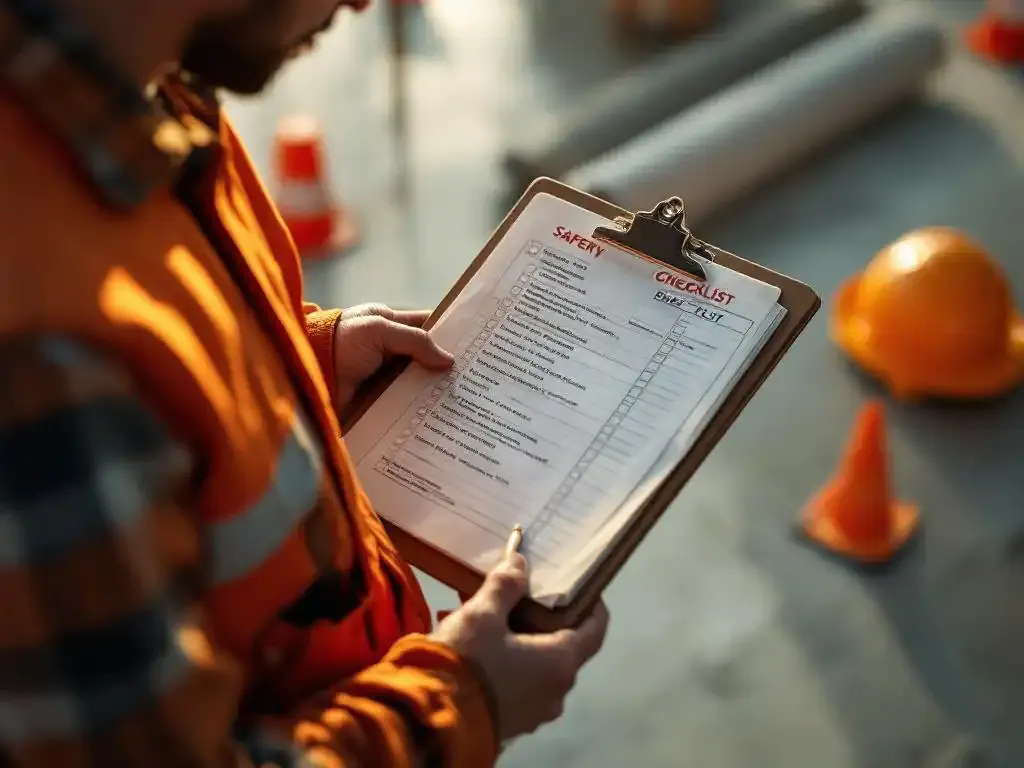
The core is the same every time. Use this site induction checklist as a starting point and add what is specific to your site.
| Topic | What to cover |
|---|---|
| 1. Site rules | Working hours, signing in and out, smoking, phones, alcohol and drugs, who is in charge |
| 2. PPE | What is required where, and where to get or replace it |
| 3. Traffic and pedestrian routes | Segregated walkways, crossing points, vehicle movements, reversing plant, speed limits |
| 4. Hazards specific to this site | Work at height, excavations, live services, asbestos, hazardous substances, lifting operations, other trades |
| 5. Reporting | How to report an incident, near miss or unsafe situation, and to whom |
| 6. Emergency procedure | Alarm, escape routes, assembly point, first aiders, fire points |
| 7. Permits and who to ask | Which work needs a permit, who issues it, who to go to with a question |
| 8. Welfare | Toilets, washing facilities, drinking water, rest and changing areas |
| 9. Cards and competence | Which cards or certificates are checked, and for which tasks |
Keep it short. A 45-minute induction is not more thorough; it is just less remembered. Cover what this person needs for this site, and end with a few check questions to confirm it landed.
Project-specific instructions for the first day on site
General training does not tell someone that the north gate is closed this week, that the crane will be lifting over the car park on Tuesday or that the client requires a permit for any hot work. That is what the project-specific part of the induction is for.
- Current conditions: phases of work, other contractors active, temporary routes.
- Client requirements: extra rules from the client or the building occupier.
- Specific risks this week: major lifts, demolition, live services, confined spaces.
- Contacts: the supervisor for this area and how to reach them.
Send this information before the first day where possible, so people arrive prepared. And update it whenever the site changes: an induction from three months ago describes a site that no longer exists.
Paper, video, online or WhatsApp?
The format is open, as long as you can show the induction was given and understood.
| Format | Strengths | Points to weigh |
|---|---|---|
| Paper and a briefing at the gatehouse | Personal, easy to start | Queues at busy times, hard to prove who heard what, language |
| Video in reception | Consistent message every time | One screen means one group at a time; changing one detail means a new film |
| Online portal before arrival | Done before the person arrives | Needs an account and a login; drivers and short-notice workers often skip it |
| WhatsApp on their own phone | Everyone at once, in their own language, with check questions and an instant record | Keep the content short and visual |
Whatever format you choose, check three things: can people understand it in their own language, can you test that it landed, and can you show within minutes who completed which version and when.
Running it without a queue at the gate
The hard part is rarely the content; it is the flow. A driver sitting in reception at half past six watching a fifteen-minute film costs you both time, and when the gate gets busy the induction is the thing that quietly gets skipped.
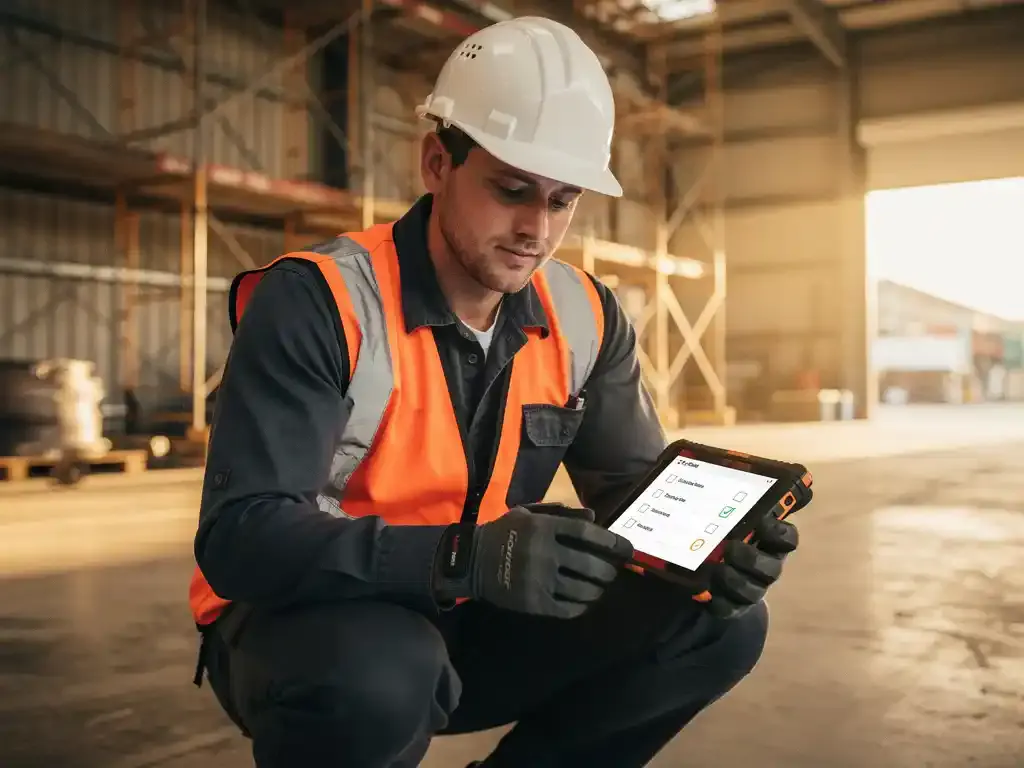
With E-lia, people scan a QR code at the gate, work through the induction on their own phone via WhatsApp, in their own language, and are only let through once they have finished it. The record lands in your dashboard straight away: who, from which company, when and with what result. Jan De Nul controls site access in seconds this way, with a different mix of permanent staff, subcontractors, drivers and visitors arriving every day.
Frequently asked questions
What is a site induction?
A short safety briefing that everyone receives before going onto a site, covering the site rules, the hazards, the emergency procedure and who to ask. It is specific to that site, unlike general training or a CSCS card.
Is a site induction a legal requirement in the UK?
On construction sites, yes: regulation 13(4)(a) of CDM 2015 requires the principal contractor to ensure a suitable site induction is provided. Elsewhere, regulations 10 and 12 of the Management Regulations require appropriate instructions and comprehensible information for employees and for anyone else working on your site.
How long should a site induction take?
As long as it takes to cover what this person needs for this site, and no longer. For many visitors and drivers that is a few minutes; for workers starting on a complex project it is more. Short, focused inductions with a check at the end are remembered better than long ones.
Can a site induction be done online or on a phone?
Yes. CDM 2015 asks for a suitable induction, not a specific format. A digital induction is acceptable as long as it is comprehensible, covers the site's risks and you can show who completed it.
How do I record site inductions?
Record who completed the induction, from which company, when, which version and the result of any check questions. A digital system does this automatically and lets you show an auditor or client the records in minutes.
How E-lia helps
E-lia turns your existing induction, PDF or PowerPoint into a short digital site induction via WhatsApp, with a QR code per location, automatic translation into more than 50 languages and check questions at the end. Everyone who comes through the gate is recorded per person in one dashboard, alongside your toolbox talks and workplace inspections.
A site induction without the queue
Scan a QR code, complete the induction on your own phone, then walk through. Try it yourself.