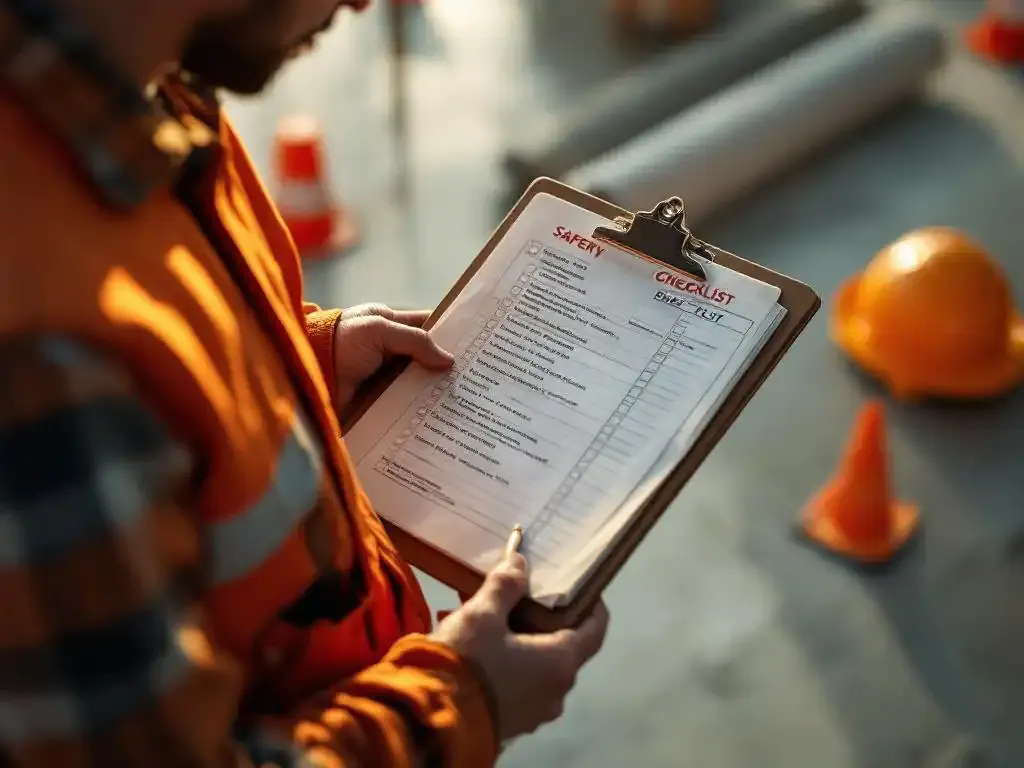


An LMRA, or Last Minute Risk Assessment, is the short risk check a worker does at the point of work, just before starting a task. In the UK you will also hear it called a point of work risk assessment, a dynamic risk assessment or a "Take 5". The idea is the same: does the situation still match the plan, and is it safe to start?
This article gives you a ready-to-use LMRA checklist, a step-by-step method, real-world examples, and practical advice on stopping work after a negative LMRA, organising LMRAs for subcontractors and training workers to spot risks. New to the term? Start with what LMRA means.
The LMRA checklist: five standard questions
A good point of work risk assessment checklist is short enough to complete in a few minutes and specific enough to make people look. Use these five questions as the core.
| Question | What to check |
|---|---|
| 1. Do I understand the task? | What am I doing, in what order, with whom? Is there a method statement or permit to work, and do I know what it says? |
| 2. What hazards are around me? | Above, below and beside me: other trades, moving plant, live services, edges, openings, weather, traffic |
| 3. Do I have the right PPE and tools? | Correct PPE, in good condition; tools and equipment inspected, tagged and suitable for the job |
| 4. Is the work area safe? | Barriers and signs in place, access safe, lighting adequate, energy isolated and locked off, gas-free where needed |
| 5. Can I get away safely if it goes wrong? | Escape route clear, emergency number known, first aid and rescue arrangements in place |
Then the golden rule: if any answer is "no" or "not sure", do not start. Resolve it first, if necessary with your supervisor. Download the free LMRA form to use this checklist straight away.
How to conduct an LMRA step by step
- Stop. Before picking up the tools, pause. Physically stop at the place where you will work.
- Look. Walk around the work area. Look up, down and around. What has changed since the planning or the morning briefing?
- Assess. Run through the five questions. What could go wrong, and how bad would it be?
- Control. Put the missing measures in place: barriers, isolation, different equipment, a second person. If you cannot control it yourself, call your supervisor.
- Decide. Start only when every answer is "yes". Record the result if your site requires it.
- Stay alert. Repeat the LMRA when the situation changes: a new phase, another trade arriving, a change in weather, a break.
In a team, each person does their own check. Then the team compares notes briefly before starting. One person noticing something the others missed is exactly the point.
Real-world LMRA examples
Maintenance in a plant. An engineer is about to replace a pump. During his LMRA he notices the pipe is still under pressure and the isolation valve has not been locked off. He does not start, makes the installation safe following the lock-out procedure, checks that it is at zero energy and then begins. One minute of thinking prevented a serious injury.
Construction site. A bricklayer arrives at his scaffold lift and sees a guard rail has been removed to land materials. He does not start, reports it to the supervisor, and the scaffold contractor refits the rail before work continues. The finding is shared in the next morning briefing.
Installation in an occupied building. An electrician is about to drill into a wall. His LMRA question "what is behind this?" leads him to check the asbestos register and use a cable detector first. The register shows the area is clear, the detector finds a cable, and he moves the fixing point.
Stop work after a negative LMRA
An LMRA is only worth something if a "no" actually stops the work. That requires support from the top.
The law backs workers here. Regulation 8 of the Management of Health and Safety at Work Regulations 1999 requires employers to set up procedures for serious and imminent danger, including allowing people to stop work and go to a place of safety. The Employment Rights Act 1996 (sections 44 and 100) protects workers from detriment or dismissal for leaving or refusing to return to a place of work in circumstances of serious and imminent danger. And section 7 of the Health and Safety at Work etc. Act 1974 requires employees to take reasonable care of themselves and others.
In practice:
- Make "stop" a rule, not a favour. Write it into your safety policy and repeat it in inductions and toolbox talks.
- Respond positively every time. A supervisor who sighs at a stop teaches the whole team not to stop again.
- Solve the issue quickly. A stop that leaves a crew waiting for hours creates pressure to skip next time.
- Record stops and share them. Show that stopping prevented something. That is the best advert for the LMRA.
LMRAs for subcontractors and external workers
Subcontractors and agency workers often face the highest risks with the least knowledge of the site. Under CDM 2015, the principal contractor must coordinate the work and each contractor must provide supervision, instruction and information to their workers.
- Include the LMRA in contracts and inductions. Make clear from day one that every worker does a point of work check before starting.
- Use the same questions for everyone. One checklist for own staff and subcontractors avoids confusion.
- Make it understandable. Regulation 10 of the Management Regulations requires comprehensible information. Offer the LMRA in the worker's own language.
- Make it easy. A check that requires an app download or a login will not be done by a driver or a two-day subcontractor.
- Check that it happens. Supervisors should ask about the LMRA during their rounds and include it in workplace inspections.
Training workers to recognise risks
A worker can only answer "what hazards are around me?" if they know what to look for.
- Use real photos from your own sites. Ask "what is wrong here?" in a toolbox talk. It sharpens the eye better than theory.
- Discuss near misses and stops. Each one is a practical lesson in what an LMRA can catch.
- Pair new starters with experienced colleagues who say their LMRA thoughts out loud.
- Refresh regularly. A short LMRA toolbox talk a few times a year keeps the habit alive.
A digital LMRA on the phone
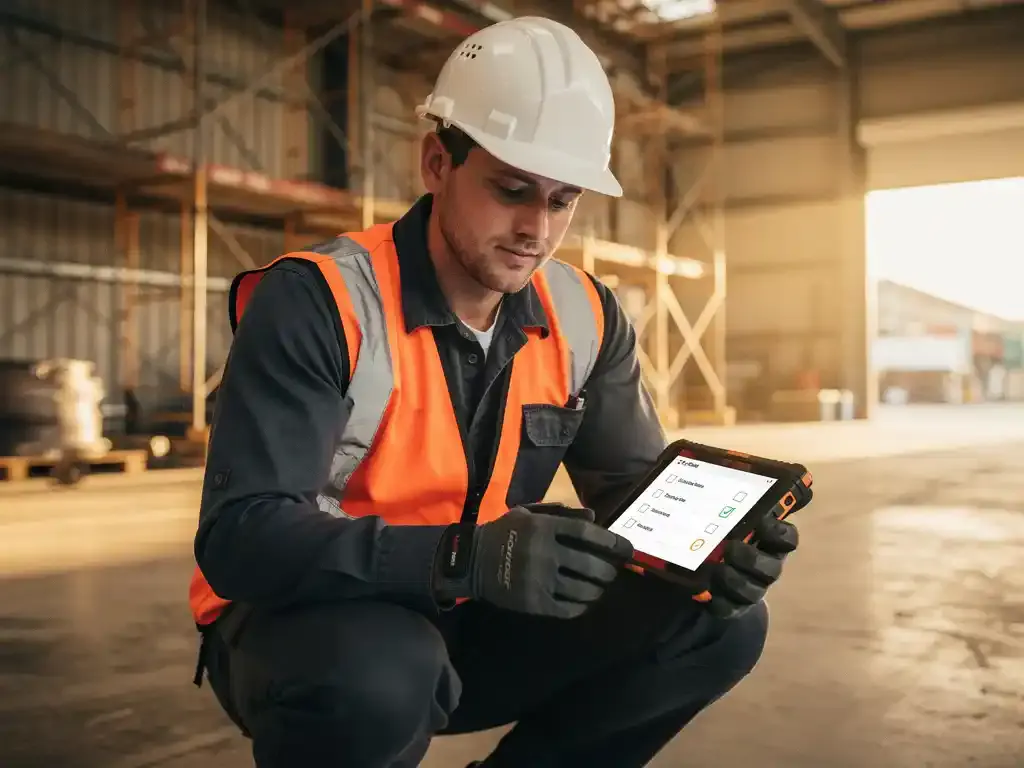
Paper LMRA cards are cheap, but they disappear into pockets and vans, and nobody sees the "no" answers in time. A digital LMRA on the worker's own phone keeps the routine simple and makes the results visible. The worker answers the five questions, adds a photo when something is wrong, and the supervisor sees a stop straight away. Over time, the data shows which risks keep coming up, so you can address them in toolbox talks and workplace inspections.
Frequently asked questions
What should an LMRA checklist include?
Five core questions: do I understand the task, what hazards are around me, do I have the right PPE and tools, is the work area safe, and can I get away safely if something goes wrong. Add site-specific points where needed.
How long does an LMRA take?
Usually two to five minutes. Longer is a sign that the planning or risk assessment is missing something.
Is a point of work risk assessment the same as an LMRA?
Yes, in practice. Point of work risk assessment, dynamic risk assessment and Take 5 are UK names for the same short check before starting a task.
What happens if a worker refuses to start after an LMRA?
That is the system working. The supervisor resolves the issue, the worker restarts the LMRA and only then starts. UK employment law protects workers who stop because of serious and imminent danger.
Do subcontractors need to do an LMRA?
Yes, if you want the check to work on your site. Include it in contracts and inductions, use the same checklist for everyone and make it available in their own language.
How E-lia helps
With E-lia, workers complete the LMRA via WhatsApp on their own phone, in their own language, without an app or login. A photo goes with any issue, a stop reaches the supervisor straight away, and every completed LMRA is recorded in the dashboard for your audit. Use findings directly in your next toolbox talk.
Make the LMRA a daily habit
Receive a demo LMRA on your phone and see what your supervisors see.