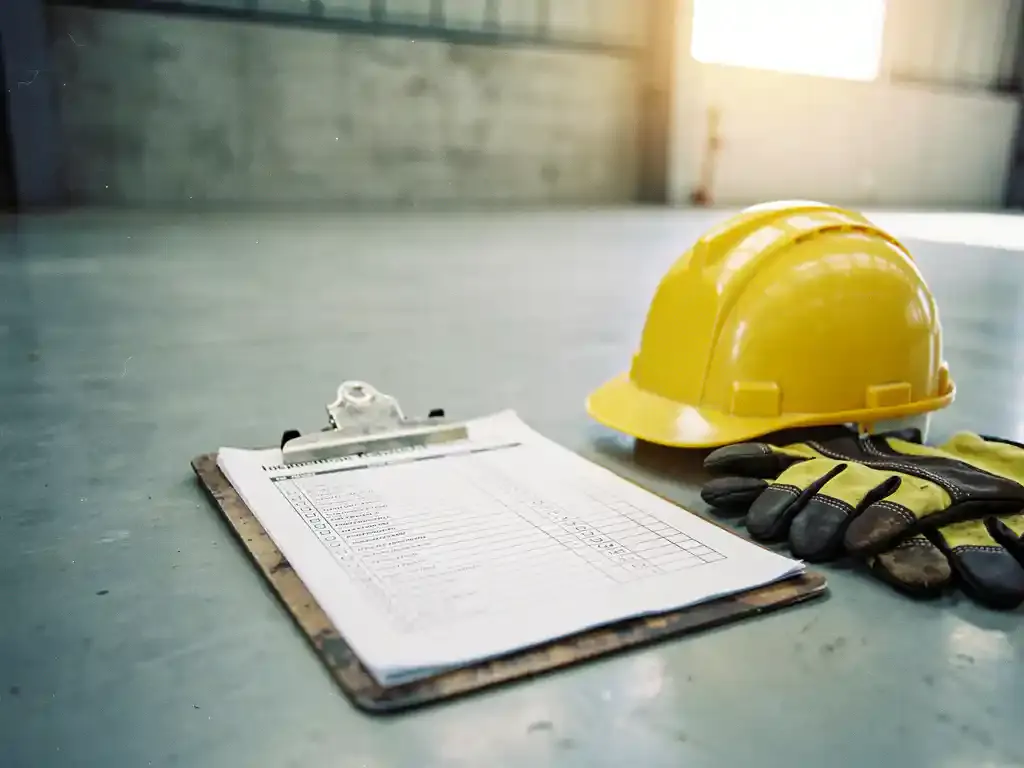

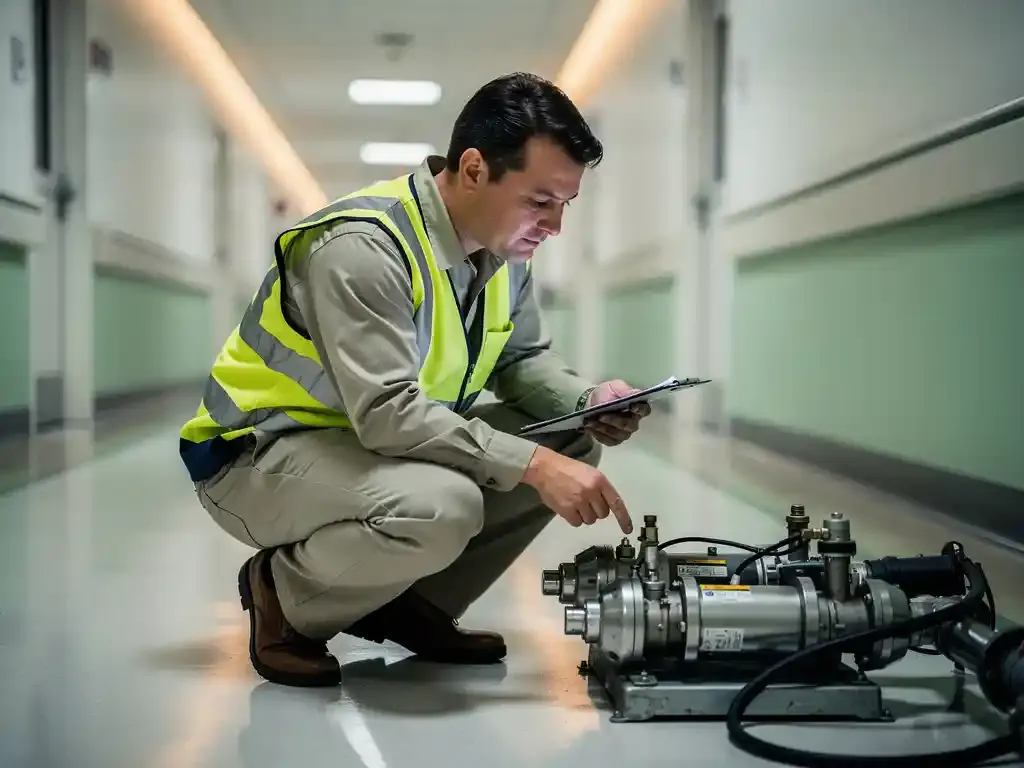
A workplace inspection is a planned, structured walk-round of a site, factory or office to check that the workplace, equipment and ways of working are safe. The inspector uses a checklist, records what they find and makes sure unsafe conditions are put right.
In the UK there is no single regulation that says "carry out a workplace inspection every month". But the law does require you to monitor your health and safety arrangements, and regular inspections are by far the most common way to meet that duty and to prove it. This article explains what a workplace inspection is, which UK legislation sits behind it, who is responsible and what it costs when inspections slip.
What is a workplace inspection?
A workplace inspection is a form of active monitoring: you go looking for problems before they cause harm, instead of waiting for an accident to tell you. A typical inspection covers:
- The workplace itself: floors, traffic routes, lighting, housekeeping, fire exits, welfare facilities.
- Work equipment: guards, pre-use checks, inspection tags, electrical leads, ladders and access equipment.
- Ways of working: safe systems of work, permits, PPE use, manual handling, segregation of people and vehicles.
- Substances and environment: storage of hazardous substances, dust, noise, ventilation, temperature.
- Emergency arrangements: fire extinguishers, first aid, emergency routes and assembly points.
The result is a record of findings, each with a photo where possible, an action, an owner and a deadline. That record is what turns a walk around the site into evidence.
A workplace inspection is not the same as a risk assessment or a safety walk. A risk assessment analyses what could cause harm and decides on control measures; an inspection checks whether those measures are actually in place. Read more about the difference between a workplace inspection and a risk assessment and the difference between a safety walk and a workplace inspection.
Is a workplace inspection a legal requirement in the UK?
In short: the duty to monitor is a legal requirement, and inspections are how almost every organisation meets it. These are the key pieces of UK legislation.
| Legislation | What it requires | How inspections help |
|---|---|---|
| Health and Safety at Work etc. Act 1974, section 2 | Employers must ensure, so far as is reasonably practicable, the health, safety and welfare of employees, including safe plant, systems of work and workplace | Inspections check that this is actually the case on the ground |
| Health and Safety at Work etc. Act 1974, section 3 | Employers must not expose non-employees, such as contractors and visitors, to risk | Inspections cover everyone on site, not just your own staff |
| Management of Health and Safety at Work Regulations 1999, regulation 3 | A suitable and sufficient risk assessment, kept under review | Inspection findings show when the assessment needs updating |
| Management of Health and Safety at Work Regulations 1999, regulation 5 | Arrangements for planning, organisation, control, monitoring and review | Inspections are the main form of active monitoring |
| Workplace (Health, Safety and Welfare) Regulations 1992 | Maintenance, cleanliness, floors, traffic routes, lighting, welfare | The checklist for the workplace itself |
| Construction (Design and Management) Regulations 2015 | The principal contractor must plan, manage and monitor the construction phase | Site inspections are central to that monitoring |
| Work at Height Regulations 2005, LOLER 1998, PUWER 1998 | Inspection of scaffolds, lifting equipment and work equipment | Statutory inspections with set intervals |
You can read the Management of Health and Safety at Work Regulations 1999 on legislation.gov.uk, and HSE's guidance on managing for health and safety (HSG65) explains how monitoring fits into the Plan, Do, Check, Act cycle.
Statutory inspections with fixed intervals
Some inspections do have a fixed interval in law. Scaffolds must be inspected at least every seven days under the Work at Height Regulations 2005, excavations at the start of every shift under CDM 2015, and lifting equipment must be thoroughly examined every six or twelve months under LOLER. See how often you should carry out a workplace inspection for the full overview.
Safety representatives
Where a recognised trade union has appointed safety representatives, the Safety Representatives and Safety Committees Regulations 1977 give them the right to inspect the workplace, normally at least every three months. That is their right, not a replacement for your own inspections as employer.
Who carries out workplace inspections?
The employer is responsible for making sure inspections happen. Who actually walks the site depends on the organisation.
- Site managers and supervisors usually carry out the weekly inspection of their own area.
- Health and safety advisers carry out broader or more technical inspections and check the quality of the regular ones.
- Competent persons carry out statutory inspections, such as a trained scaffold inspector or a LOLER examiner.
- Workers and safety representatives take part in joint inspections. They know where the real problems are.
Whoever inspects must be competent for that inspection. Regulation 7 of the Management Regulations requires you to appoint competent help, and regulation 13 requires that people have adequate training for what they are asked to do.
On construction sites, responsibilities are shared between client, principal contractor and contractors. Read who is responsible for workplace inspections on a construction site for the detail.
Temporary and agency workers
Agency workers often work in the riskiest jobs with the least knowledge of the site. Responsibility for their safety is shared.
- The hirer (the business where they work) controls the workplace and the daily work, so includes agency workers in inspections and makes sure they receive site-specific information and instruction.
- The employment business must check that the hirer has assessed the risks and that the worker is suited to the job. Regulation 15 of the Management Regulations requires the hirer to give the employment business information about the skills needed and the risks of the job.
- Under the PPE at Work Regulations 1992, as amended in 2022, workers who are not employees but work under your direction (so-called limb (b) workers) are entitled to the same PPE as employees.
In practice: an inspection that finds an agency worker without the right PPE or without an induction is a finding for the hirer to fix straight away.
ISO 45001 and workplace inspections
If you are certified to ISO 45001 or working towards it, inspections are part of the expected monitoring under clause 9.1, and findings feed into incident and nonconformity handling under clause 10.2. The standard does not prescribe a frequency, but you must set one and show that you stick to it. Read what ISO 45001 requires for workplace inspections.
What does a missed workplace inspection cost?
A skipped inspection rarely costs anything on the day. The cost comes later, and it can be large.
- Accidents and lost time. The unsecured edge, the blocked fire exit or the damaged lead that an inspection would have found.
- Enforcement. HSE inspectors can issue improvement and prohibition notices. Where they find a material breach, they recover their costs under Fee for Intervention.
- Prosecution. Fines for health and safety offences are set using sentencing guidelines that take the size of the organisation into account, and can be very large.
- Civil claims and insurance. Without inspection records, it is hard to show that you took reasonable care.
- Contracts and reputation. Clients increasingly ask for proof of inspection regimes before awarding work.
How many accidents can regular inspections prevent?
Nobody can give you an honest single number. What is clear is how inspections prevent accidents: they catch unsafe conditions, such as a missing guard, a trailing cable or a removed handrail, while they are still near misses. Each finding that is fixed removes one route to an accident.
The effect is strongest when inspections are frequent, consistent and followed up. An inspection that finds the same issue every week without anything changing prevents nothing. That is why tracking actions to close-out matters as much as the inspection itself.
Frequently asked questions
Is a workplace inspection a legal requirement in the UK?
The Management of Health and Safety at Work Regulations 1999 require you to monitor and review your health and safety arrangements. The law does not prescribe workplace inspections by name, but they are the standard way to meet that duty. Some inspections, such as those of scaffolds, excavations and lifting equipment, are required by specific regulations with set intervals.
Who is responsible for workplace inspections?
The employer. On construction projects, the principal contractor plans, manages and monitors the construction phase under CDM 2015, while each contractor remains responsible for its own work. The people who actually inspect must be competent for that inspection.
What is the difference between a health and safety inspection and an audit?
An inspection checks the physical workplace and ways of working at a given moment. An audit checks whether your whole safety management system works, including policies, training, records and how inspections are followed up.
Can HSE ask to see my inspection records?
Yes. During a visit or investigation, an HSE inspector can ask for records that show how you manage and monitor risks. Clear, dated inspection records with photos and closed actions are among the strongest evidence you can show.
Do workplace inspections have to include agency workers and contractors?
Yes. Your duties under section 3 of the Health and Safety at Work etc. Act 1974 cover non-employees, so inspections should look at everyone working on your site, including how contractors and agency workers are working.
How E-lia helps
E-lia lets your site managers and supervisors carry out workplace inspections via WhatsApp, with your own checklist, a photo per finding and actions that reach the right person straight away. Every inspection is stored in one dashboard, ready for the HSE, your client or your ISO 45001 auditor. Prefer to start on paper? Download the free workplace inspection form.
Prove your inspections, without paperwork
See how an inspection via WhatsApp lands in your dashboard with photos and time stamps.